5 Ways Predicting Vehicle Problems with AI Reduces Fleet Downtime
Key Takeaways
- ➤ Predicting Vehicle Problems with AI allows fleets to detect faults before breakdowns occur.
- ➤ OBD diagnostics and fuel sensor data enable predictive maintenance systems.
- ➤ Predictive monitoring can reduce vehicle downtime by 30–50%.
- ➤ Early fault detection can reduce repair costs by 20–40%.
- ➤ The Indian AI-powered fleet market is projected to reach ₹245.8 billion by 2029.
Introduction
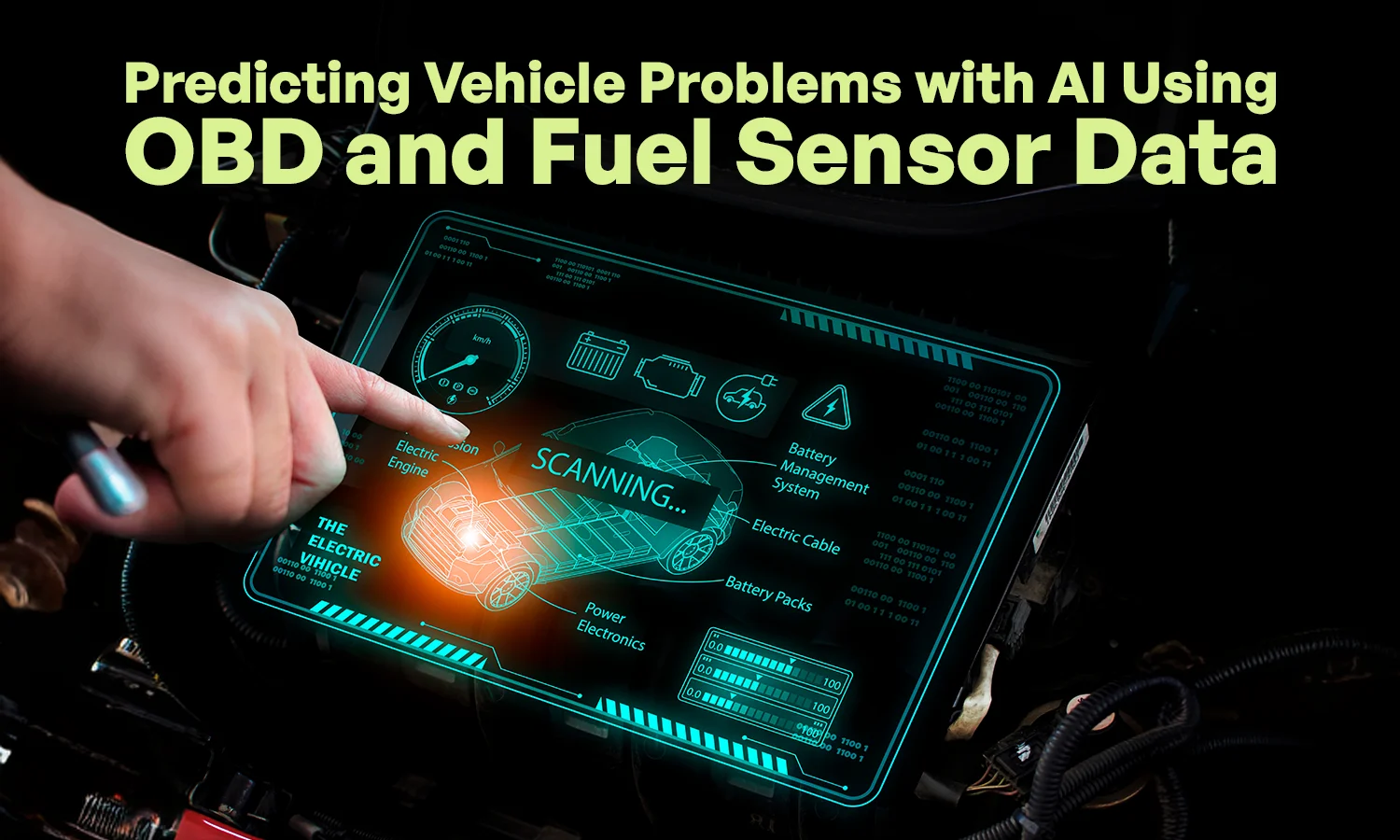
Vehicle maintenance is evolving across the logistics industry. Instead of waiting for vehicles to fail, fleets now analyse operational data to identify problems earlier. Predicting Vehicle Problems with AI allows operators to monitor vehicle health continuously and detect issues before they become serious failures.
Artificial intelligence analyses diagnostic signals, fuel consumption patterns, and vehicle behaviour to identify anomalies. This approach allows fleets to move from reactive repairs toward predictive maintenance strategies that improve reliability and reduce operational disruptions.
In India, the adoption of intelligent fleet monitoring systems is growing rapidly. The AI-powered fleet technology market is expected to reach ₹245.8 billion by 2029, reflecting increasing demand for data-driven diagnostics and smarter fleet management systems.
How Can AI Help Predict Vehicle Problems?
Artificial intelligence can identify small changes in vehicle behaviour that traditional maintenance processes may overlook. Instead of reacting to warning lights, predictive systems analyse vehicle data continuously.
The process behind Predicting Vehicle Problems with AI usually follows four steps.
Data collection
Sensors within the vehicle monitor operational parameters such as engine temperature, vibration levels, battery voltage, and oil quality. This information is collected through an obd system connected to the vehicle’s diagnostic port.
Pattern analysis
Machine learning models evaluate historical and real-time vehicle data to determine normal performance conditions.
Anomaly detection
When unusual behaviour appears, such as increased vibration or irregular engine performance, AI systems detect these deviations as early warning signs.
Failure prediction
Advanced algorithms estimate the remaining useful life of components such as batteries, brakes, or fuel injectors. Through this process, Predicting Vehicle Problems with AI helps fleets detect faults earlier and schedule maintenance more efficiently.
What Role Do OBD and Fuel Sensors Play in AI Diagnostics?
Artificial intelligence systems rely on consistent vehicle data to operate effectively. Diagnostic systems and fuel monitoring sensors act as the primary data sources for predictive analytics.
An OBD Fleet Tracker collects real-time engine diagnostics including RPM, coolant temperature, and engine load. Fleet operators often use specialized obd software to transmit this diagnostic information to central monitoring platforms where predictive models analyse long-term performance trends.
Fuel sensors provide an additional layer of insight. These sensors monitor fuel levels and consumption patterns, helping fleets detect irregular usage patterns or inefficiencies. When this information is analysed alongside diagnostic data, AI systems gain a more complete view of vehicle performance.
Understanding What is obd is essential in this context. The system serves as the communication interface between the vehicle’s mechanical components and digital monitoring platforms. These diagnostic signals allow predictive systems to support Predicting Vehicle Problems with AI in real fleet environments.
What Are the Benefits of AI in Vehicle Problem Prediction with the Help of OBD and Fuel Sensor?
Predictive diagnostics deliver several operational improvements for fleet operators.
- ➤ Reduced downtime
Predictive maintenance systems can reduce unexpected vehicle downtime by 30–50% by identifying problems early. - ➤ Lower repair costs
Early detection of faults can reduce maintenance expenses by 20–40%, since small issues are addressed before major failures occur. - ➤ Improved operational efficiency
Large fleet operators using predictive monitoring systems have reported 15–35% improvements in operational efficiency. - ➤ Better fuel efficiency
AI analysis of fuel consumption patterns and driving behaviour can deliver 10–15% improvements in fuel efficiency. - ➤ Improved safety
Early detection of mechanical faults such as engine overheating or brake wear reduces the risk of accidents.
These advantages highlight the growing importance of Predicting Vehicle Problems with AI for modern fleet operations.
How AI Will Shape the Future of Fleet Management with OBD and Fuel Sensors
Fleet management technology is gradually moving beyond simple vehicle tracking toward predictive diagnostics and intelligent monitoring. Artificial intelligence enables operators to analyse vehicle performance continuously and detect issues before they affect operations.
Modern transportation management solutions are beginning to combine diagnostics data, fuel monitoring, and operational analytics into integrated platforms. These systems help fleet managers gain deeper visibility into vehicle health and operational performance. Future systems are also expected to process vehicle data directly within onboard hardware using edge computing. This allows faster detection of anomalies and quicker alerts for fleet managers. As predictive technologies continue to develop, Predicting Vehicle Problems with AI will become increasingly important for improving fleet reliability and maintenance planning.
Conclusion
Predicting Vehicle Problems with AI helps fleets identify faults early and avoid unexpected breakdowns. By combining OBD diagnostics and fuel sensor data, platforms like Taabi transform vehicle data into operational intelligence that supports reliable and efficient fleet operations.
FAQs
Can AI Accurately Predict Truck Issues Before They Occur?+−
Yes. By analyzing real-time sensor data and historical patterns, AI flags “silent” symptoms to prevent breakdowns before they happen.